Shoreline Restoration Initiative

Adopt a Mangrove

Register to Attend Our Adopt a Mangrove Workshop

May 7th 2026
Time:  5:30 pm – 7:30 pm
Location: 290 Kettle Harbor Drive, Placida FL 33946

May 7th 2026 Registration Adopt a Mangrove

We Need Your Help

Recent hurricanes damaged mangrove shorelines across the Bocilla Islands chain, reminding us how important these natural buffers are. Through grant funding awarded December 30, 2025 for Mangrove Education and Restoration on Palm Island and surrounding areas in partnership with the Charlotte Harbor Environmental Center, the Bocilla Islands Conservancy invites residents to participate in our Adopt A Mangrove program as part of our Shoreline Restoration Initiative.

By caring for a young mangrove propagule at home, you help support shoreline restoration across the Bocilla Islands chain. These mangroves will later be planted with our partner, the Charlotte Harbor Environmental Center, at permitted locations. Join us at an upcoming Adopt A Mangrove workshop to take part in this community effort.

Types of Mangroves

Southwest Florida is home to three native mangrove species that work together to protect and support the Bocilla Islands chain. Red, black, and white mangroves each grow in different shoreline zones and play distinct roles in stabilizing sediments, improving water quality, and providing habitat for fish, birds, and other wildlife. Together, they form a layered living shoreline that strengthens the resilience of our barrier island ecosystem.

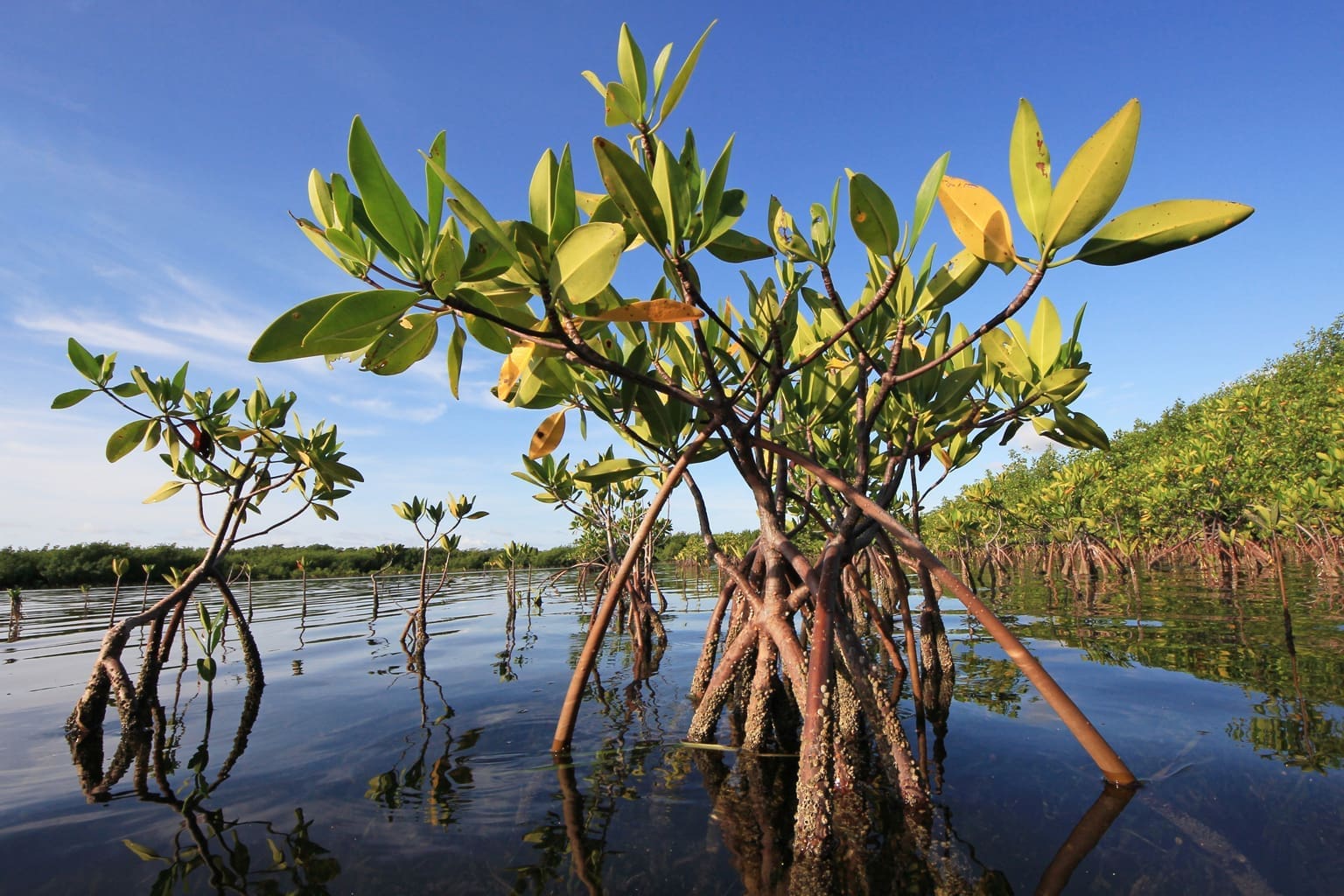
Red Mangrove

(Rhizophora mangle)

• Stabilize shorelines and reduce erosion
• Provide nursery habitat for juvenile fish and crustaceans
• Trap sediments and improve water clarity
• First line of defense during storms

These are often the species most affected during major storm surge events and most important for shoreline restoration efforts.

RED MANGROVES

Black Mangrove

(Avicennia germinans)

Black mangroves typically grow slightly inland from red mangroves and are recognized by their upright breathing roots called pneumatophores.

• Help stabilize higher shoreline elevations
• Filter pollutants and improve water quality
• Provide habitat for birds and insects
• Release salt through their leaves

You will often see their pencil like roots sticking up from the mud at low tide.

black mangroves

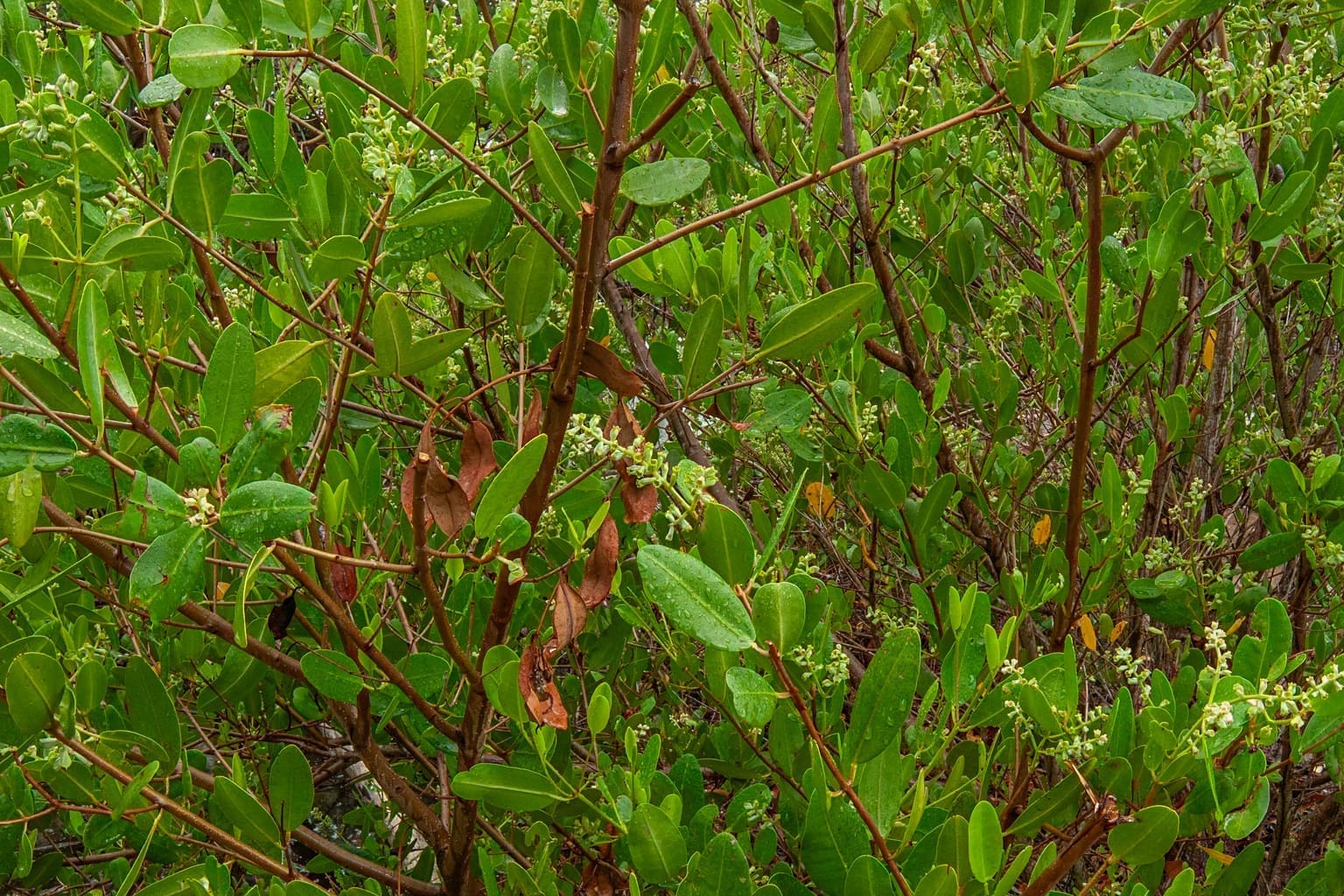
White Mangrove

(Laguncularia racemosa)

White mangroves grow farthest inland and form the transition between mangrove forests and upland areas.

• Support shoreline stability in upper coastal zones
• Provide nesting habitat for birds
• Help buffer storm impacts farther inland
• Adapt well to variable salinity conditions

Together, these three mangrove species create a layered living shoreline that strengthens resilience across barrier island systems like the Bocilla Islands chain.

White mangrove tree

Meet Our Guest Lecturer, Armando Ubeda

Learn more about Armando Ubeda and his role as marine and coastal (Sea Grant) agent at UF/IFAS Extension Sarasota County, in this brief introduction video.

Why Mangroves Matter?

Air Air Shoreline Protection

Mangrove root systems stabilize sediments, reduce erosion, and absorb wave energy, helping protect the Bocilla Islands chain from storm surge and coastal flooding.

Habitat Creation

Mangroves provide essential nursery habitat for juvenile fish, crabs, and shrimp and nesting areas for wading birds, supporting the biodiversity of our barrier island ecosystem.

Restoration Impact

Restoring mangroves strengthens natural coastal defenses and helps rebuild living shorelines damaged by Hurricanes Ian in 2022 and Helene and Milton in 2024 across our region.

Ways to Support Us

Join our conservation programs to protect and restore our island’s ecosystems. Volunteer your time and talents, make a donation to support essential resources, or participate in our adoption program by nurturing sea oats or mangrove propagules, or adopting a mini reef to aid in marine life restoration.

Volunteer

Donate

Adopt

Hand’s on Programs

Our programs are designed for volunteers eager to learn about the ecosystem! Participate in activities such as building Vertical Oyster Gardens, propagating mangroves, restoring shorelines, and planting sea oats. Unlike traditional lectures, these hands-on experiences allow you to engage directly with the environment and make a tangible impact.

Volunteer Clean Up Island watch

Clean Islands

Volunteer Island Cleanup Team

The Clean Islands volunteer team is dedicated to preserving the beauty of our island. Our passionate group of volunteers comes together to clean vital areas, including easements and beach access points, ensuring our environment remains vibrant and accessible. Thanks to our generous community members and visitors, we have successfully removed approximately 10 tons of construction debris and 6 tons of vegetation, all fueled by the energy and big hearts of our volunteers. Join us in making a real difference—get involved and help us keep BOCILLA Island beautiful.

Verticle Oyster Garden

Oysters For Clean Water – Vertical Oyster Garden Workshops

March 19th 2026 & April 2026 (Date TBD)

Click Here to Sign Up.  Join us in this vital mission to protect and revitalize our aquatic ecosystems!  VOGs consist of oyster shells strung together with lengths of rope, designed to hang below docks.  Building on the success of our pilot projects at the Marine Life Park and Artificial Reef, we are excited to introduce our upcoming program this fall. This effort not only aims to enrich our park’s biodiversity but also encourages community members to establish similar gardens at their docks.

mini reef installation

Mini Reef Habitat Program

20 Mini Reefs were installed by Ocean Habitat on May 17, 2023 at the Artificial Reef & Marine Life Park.

If you have a dock, you can purchase your very own Mini Reef, and we’ll help you install it. And if you don’t have a dock, you can still join the fun by adopting a Mini Reef that will be installed at a host location or one of our parks. Best of all, you can adopt a portion of a Mini Reef — every contribution helps, and together we’ll build reefs that clean the water and bring marine life back to our islands.  Each Mini Reef filters up to 30,000 gallons of seawater daily while creating a habitat for fish and other marine life.

certified wildlife habitat final

We are a Nationally Certified Wildlife Habitat!

We are proud to be a Nationally Certified Wildlife Habitat Community, recognizing that our community as a whole met the requirements by certifying 40 individual properties and providing ongoing education that supports and celebrates wildlife conservation.

Receiving a Certified Wildlife Habitat® designation from the National Wildlife Federation means that your property provides the essential elements wildlife need to thrive—food, water, cover, places to raise young, and sustainable practices that support the local ecosystem. This certification recognizes your commitment to creating and maintaining a healthy environment where native plants and animals can flourish.