Installing our Living Shoreline – Volunteers Welcome
LIVING SHORELINE RESTORATION
Volunteer Planting Day | August 21
We’re excited to announce that the Bocilla Islands Conservancy Living Shoreline Restoration Project is officially moving forward. Our permits have been approved, and installation is scheduled for August 21.
WHY THIS SHORELINE NEEDS HELP
This stretch of shoreline near the little bridge on South Gulf has been through a lot.
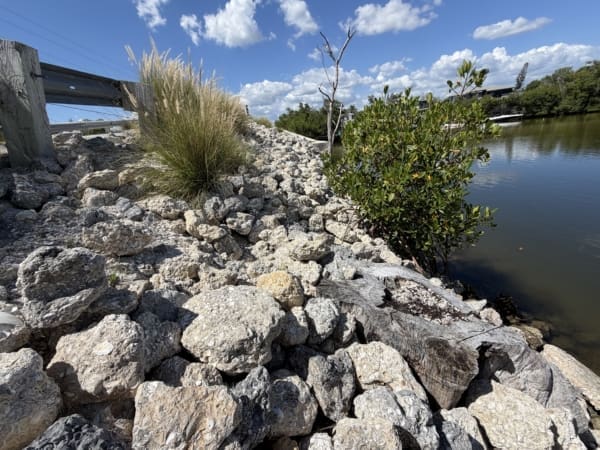
The area was previously dominated by invasive trees, which were removed as part of efforts to restore native habitat. Then the hurricanes and storms came. Storm surge, heavy water flow, and debris caused substantial erosion and damage to the exposed shoreline.
The County stepped in and installed riprap to stabilize the most heavily impacted section. Now we have an opportunity to take the next step and begin restoring the shoreline naturally.
CREATING A MORE RESILIENT SHORELINE
Our restoration will cover approximately 170 feet, beginning at the existing riprap and continuing around the shoreline.
Rather than relying solely on rock for protection, we’ll be establishing native coastal vegetation to create a living shoreline. Mangroves and other native shoreline plants can help stabilize soils, reduce erosion, buffer wave energy, provide important wildlife habitat, and build greater resilience over time.
This project isn’t simply about repairing past storm damage. It’s about helping create a shoreline that works with the natural system and is better prepared for what comes next. LEARN MORE
A PARTNERSHIP FOR RESTORATION
This project is being made possible through a mangrove restoration grant awarded to CHEC, the Charlotte Harbor Environmental Center. Bocilla Islands Conservancy is partnering with CHEC to bring this restoration project to our island. We’re also grateful for the support of Keep Charlotte Beautiful, which will be assisting with supplies, gloves, and volunteers for the project. We are also grateful to the volunteers from our neighboring Lemon Bay Conservancy who will be joining us and lending a hand.
This is a wonderful example of conservation organizations and community partners coming together around a shared goal: restoring habitat and building a more resilient shoreline.
VOLUNTEERS NEEDED
On August 21, we’ll bring volunteers together to begin transforming this damaged stretch of shoreline into a healthier, more resilient living shoreline. There is quite a bit of work to do. Volunteers will help clean up the site and remove trash and storm debris, prepare planting areas, move and stage plants, and help install native vegetation along the shoreline. It will be hot, and some of the work will be physically involved. Because of the location and limited space at the restoration site, we can only accommodate a small number of volunteers at one time. We plan to organize volunteers into shifts so that as many people as possible have an opportunity to participate safely.
We are reaching out to those who participated in our Adopt a Mangrove program, since they previously expressed an interest in being part of our mangrove restoration efforts. We have also sourced larger, more established mangroves, including seven-gallon plants, to give this shoreline a strong start. There will be different ways to help, so you don’t have to do the heaviest work to be part of the restoration. This is exactly the kind of hands-on work the Conservancy was created to do: neighbors and conservation partners working together to restore habitat, strengthen our island’s resilience, and care for the place we all love.
TRAINED TO DO THE WORK
This project also builds on Living Shorelines training recently completed through the University of Florida IFAS and Florida Sea Grant by Bocilla Islands Conservancy board members Linda Cotherman, Jude Smith, and Kelly Lube, along with one of our island residents. The training was led by Armando Ubeda and Savanna Barry. The program gave our team a deeper understanding of how living shorelines are planned, permitted, installed, and monitored, and how nature-based solutions such as mangroves, native shoreline vegetation, and oyster habitat can help stabilize shorelines while supporting the larger coastal ecosystem.
It is especially meaningful to now take that knowledge out of the classroom and put it to work right here on our own island.