
HELP US SECURE THE

Conservancy Center + Community Meeting Hall

The center will allow the Conservancy to expand year-round programs, pursue additional funding opportunities, and strengthen our ability to protect more land for future generations.

It will also provide the community with a place to gather and connect. The proposed center would be available for meetings and events of other community organizations such as PIE as well as meetings of small island groups and clubs.

What we do today will strengthen conservation for generations to come.
donations

If the building is not acquired, all donations to this campaign will be refunded.

0Days0Hours0Minutes0Seconds

You Believed Before

When we tried to buy the firehouse, island residents responded with remarkable generosity and enthusiasm. But we were ultimately outbid.

This time is different. The property is under contract, inspections are underway, and our 90-day due diligence period has already begun.

The clock is running. Will you stand with us again?

the old firehouse

See The Possibility

Located at 130 Gasparilla Way, this historic property was built by Bob Butcher, whose legacy already lives within its walls. The building includes a 24×24′ main room, a small upstairs room, and several additional rooms downstairs.

  • Built Solid. Nothing Hidden.

    Open construction makes it easy to inspect, understand, and maintain.

  • New Metal Roof

    Installed in spring 2026.

  • Mini-split Efficiently

    Year-round comfort without the cost or complexity of a central air system.

TodayOur Vision
Leaf Leaf

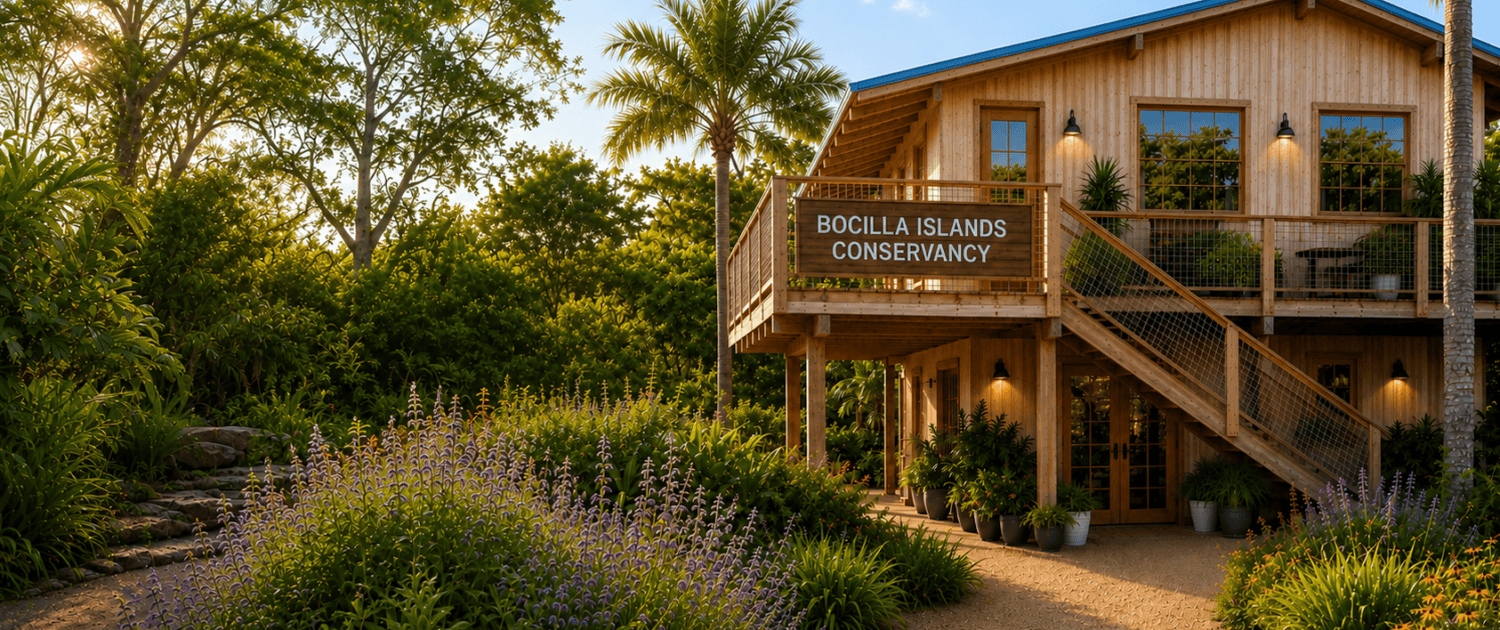
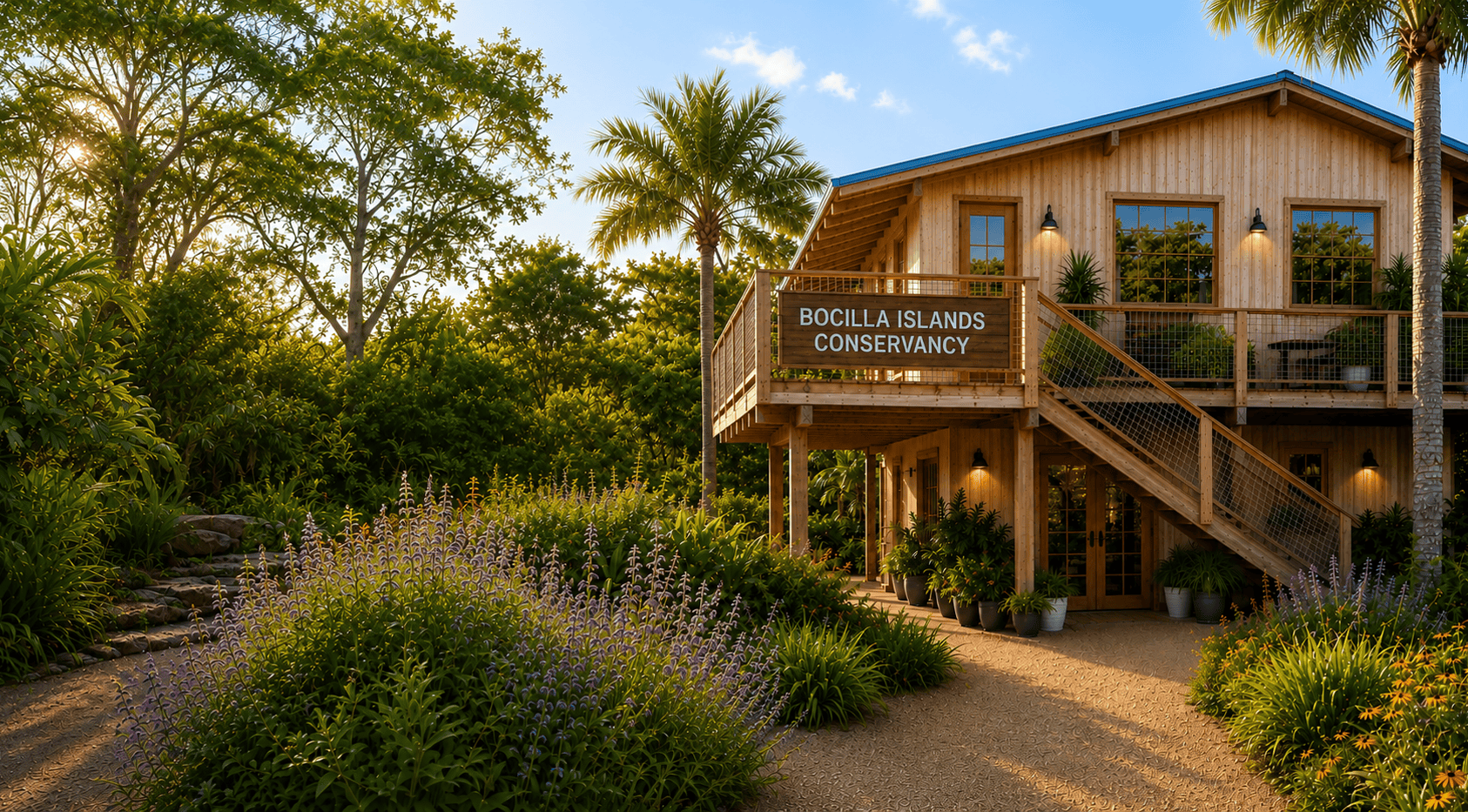
With the help of volunteers, native plants, and simple improvements, the property has the potential to quickly become a welcoming space for conservation and community activities. This image is a conceptual rendering for illustrative purposes only and does not represent a final architectural, engineering, landscaping, construction, or site plan.

Expanding Our Capacity to Protect What Matters

Imagine a permanent home where conservation comes to life. A place for environmental education, citizen science, native habitat demonstrations, and community collaboration. Plus, the space would be available for meetings and events of other community organizations such as PIE as well as meetings of small island groups and clubs.

Conceptual Illustration - Conservancy Center

Why A Permanent Space Matters?

A center can help:

  • Increase community engagement
  • Expand educational programming
  • Support citizen science initiatives
  • Attract larger grants and partnerships
  • Generate sustainable revenue
  • Create a visible conservation presence
  • Accelerate future land acquisition
  • Establish a lasting legacy of stewardship

How It Works Today

  • Events in private homes or vacant lots
  • Weather-dependent scheduling
  • Supplies stored across garages and sheds
  • Temporary tents, seating, power, and equipment
  • Repeated transportation, setup, and breakdown

How It Could Work

  • Organized storage and program resources
  • A consistent place for educational lectures and workshops
  • A welcoming environment for collaboration, planning, and community engagement
  • Building the Capacity to Expand Proven Conservation Programs
  • Permanent educational materials and displays

The goal is not to own a building.

The goal is to create a place where the Conservancy can grow and provide a welcoming, much-needed gathering space for local organizations, clubs, and the broader island community.

How Does This Grow Our Mission?

Protect More Land

New funding sources would expand our capacity to preserve habitat, care for protected properties, and act when important island land becomes available.

Feather Feather

Expand Programs

More opportunities for lectures, hands-on learning, visiting experts, community programs, and conservation education throughout the year.

Users Users

Strengthen Our Community

A welcoming, year-round gathering space would give local organizations, clubs, and neighbors a place to meet and strengthen the connections that make our island community special.

MORE THAN A BUILDING

Transforming How the Conservancy Is Funded

Island residents have made our conservation work possible. A permanent center could build on that support by opening doors to grants, partnerships, and educational funding that are largely out of reach today.

That could include small, carefully planned programs for researchers, educators, and students, as well as opportunities for children in foster care and underserved communities to experience the islands and learn about nature.

This Center Could Quickly Open New Sources of Funding.

Over time, that broader support could help protect more land without relying on the same island households for every opportunity.

Leaf Leaf

Foundation and Environmental Grants

Support for conservation, habitat restoration, water quality, and demonstration projects.

Graduation-cap Graduation-cap

Research and University Partnerships

Collaborations with scientists, universities, researchers, and students.

Book Book

Program and Education Funding

Funding for lectures, workshops, exhibits, field learning, and hands-on programs.

Suitcase Suitcase

Institiutional Sponsorships

Support for specific programs, research, education, and conservation projects.

A Clear Path Forward

Phase 1: Raise the Initial Capital

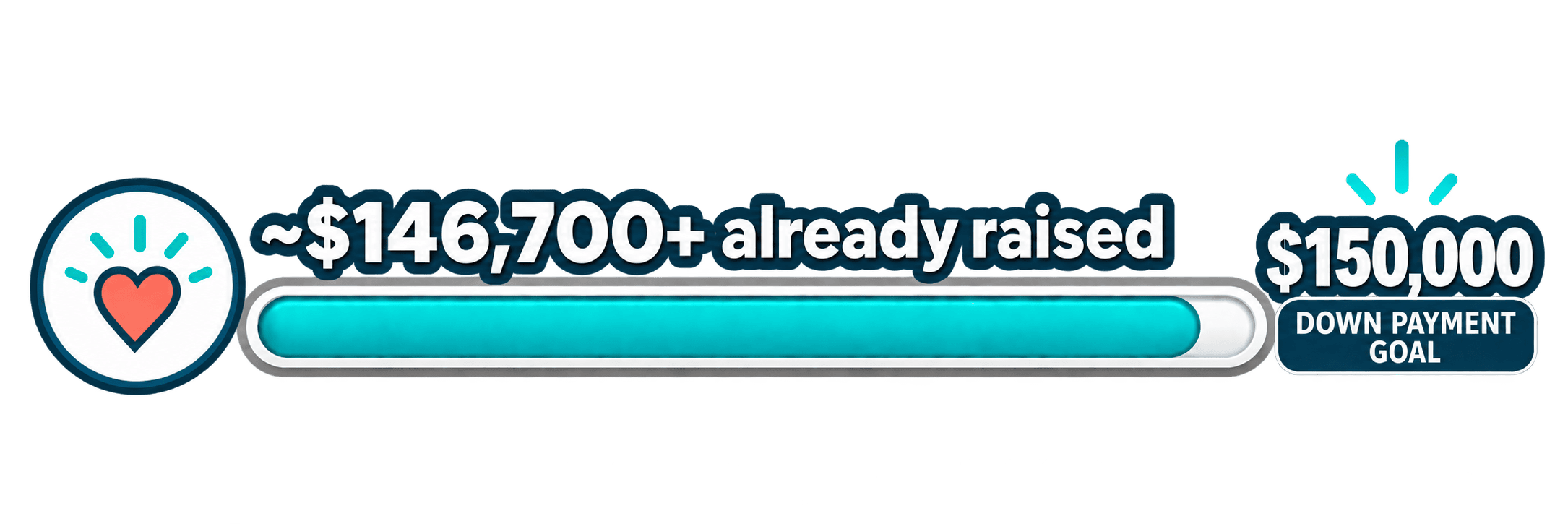
The property is under a 90-day contract, and the $25,000 deposit is fully funded. Our immediate goal is to raise $150,000 or more upfront, reducing the amount that must be financed through private lenders.

* This is a sample funding model. 

Phase 2: Founding Stewards Campaign

Imagine what we can accomplish together. If just 65 Founding Stewards committed to giving $100 a month for four years, together we could pay off the Conservancy Center loan and ensure more of every future donation goes directly toward conservation, education, and protecting our islands.

capital

This is only one example. In reality, monthly giving could range from $50 to $250 or more, allowing every household to participate at a level that feels comfortable and meaningful.

These monthly pledges are intended to help pay off the building after the initial capital campaign. If we raise more during the initial capital fund round, we may be able to shorten the repayment timeline.

We are also in the process of creating ways to recognize and honor our Capital Donors and Founding Stewards for helping make the building possible. We are currently exploring brick and wall recognition options and will announce those details soon.

  • At the end of the pledge term, monthly donors will have the option to opt out or continue their donations, based on their preference.

$122,700+ has already been raised

Every gift reduces the amount that must be financed and puts us in a stronger long-term position.

One Time Costs

The building is currently occupied and fully functional. Inspections are underway, and we will share updates as the results become available. The only potential issue identified so far is that the stairs may need to be reinforced or replaced, and we are obtaining a quote for that work.

Manageable Annual Costs

We have carefully estimated the ongoing cost of owning and operating the property, including insurance, taxes, electricity, water, routine maintenance, and contributions to a capital reserve, at approximately $685 per month, or $8,210 per year.

building costs

OPEN FINANCIAL INFORMATION

See How the Conservancy Uses Its Resources

As an all-volunteer organization, the Conservancy carefully directs its resources toward protecting and caring for island properties, supporting educational programs, and maintaining the basic operations that make this work possible.

Our projected 2026 expenses combine spending to date with anticipated costs for the remainder of the year. The largest share supports conserved properties, including acquisition costs, mortgages, taxes, maintenance, restoration, and improvements.

Projected 2026 Expenses

projected 2026 expenses

~75% of our expenses go toward our properties.

Let’s Bring This Vision Home

Imagine a place where neighbors gather, where book club and fishing clubs meet, where experts share knowledge, and every program brings us closer together.

A gift to the initial capital campaign will help secure the property and open new sources of support for conservation across the islands. Plus it creates a space for the entire island to use and enjoy!

Every donation moves us closer.

community garden boxes

Frequently Asked Questions

The Purpose and the Property

Our mission is to preserve the natural habitat of the Bocilla Islands Chain while fostering community engagement and environmental education to ensure a balanced coexistence between the ecosystem and local residents.

As the Bocilla Islands Conservancy has grown, so have the needs associated with protecting land, coordinating volunteers, supporting conservation projects, and providing environmental education. A permanent building would give the Conservancy a central place to organize this work, store materials, host meetings and educational programs, and support visiting volunteers and conservation professionals.

The property at 130 Gasparilla Way would not replace the Conservancy’s focus on acquiring and protecting greenspace. It would strengthen that work by providing the infrastructure needed to manage existing properties, expand conservation programs, pursue new grants and partnerships, and support long-term stewardship across the islands.

Protecting land remains at the heart of the Conservancy’s mission. But available properties on the islands are becoming harder to find and more expensive to acquire. At the same time, traditional fundraising alone is unlikely to support the same pace of land acquisition achieved during the organization’s first decade.

The Conservancy acquired approximately nine properties in its first 10 years. Based on rising property costs and current fundraising levels, the Conservancy believes the pace of land acquisition could slow significantly over the next decade if we rely only on traditional fundraising.

A permanent center is intended to strengthen the Conservancy’s ability to secure larger grants, build partnerships, expand educational programs, and attract additional support for land acquisition and long term stewardship. This approach reflects the Conservancy’s planning, nonprofit best practices, and conversations with conservation partners, grant professionals, and regional foundations about the types of organizational capacity that can strengthen long term funding opportunities.

The building is a tool that will help strengthen the Conservancy’s ability to secure grants, attract major donors, and pursue additional funding opportunities to protect more green space.

Conservancy Center + Programs & Partnerships
= more grants & larger funding sources
= more protected land

A permanent Conservancy Center provides a stable home for our programs, educational activities, and community outreach. For major donors and grant-making organizations, a dedicated facility demonstrates long-term commitment, organizational stability, and the capacity to successfully manage larger conservation projects. That credibility helps open the door to new funding opportunities that can be used to protect even more green space. This approach is based on conversations the Conservancy has had with conservation partners, grant professionals, and regional foundations about the types of organizational capacity that can strengthen long-term funding opportunities.

130 Gasparilla Way is a strong fit for the Conservancy because it offers a unique combination of location, layout, condition, history, and affordability that would be difficult to replicate on Palm Island.

The building’s existing layout is especially well suited to the Conservancy’s needs. It is centered around one large, open room that could support small meetings, educational programs, volunteer coordination, and other mission-related activities without requiring major renovations. Its straightforward construction and exposed structural elements should also make it relatively easy to inspect and maintain over time.

The property also has historical significance. It was constructed by Bob Butcher, one of the island’s early residents, and reflects the simple Old Florida character that many people associate with Palm Island.

The Conservancy also negotiated a purchase price that it believes represents a favorable value based on the property’s condition, layout, and the limited availability of suitable island properties. Properties that combine these characteristics are uncommon on Palm Island, which was an important factor in the Conservancy’s decision to evaluate this opportunity.

Bob Butcher was one of Palm Island’s early residents and played an important role in the island’s development and community life. He began coming to the island around 1975, when there were only about a dozen homes, and later built the house at 130 Gasparilla Way.

Bob helped construct many of the island’s early homes. He was also among the first volunteers and captains of the island’s Fire and Rescue Team, helped secure its early fire trucks, and later became a founding member of Palm Island Estates (PIE).

Today, the house reflects both Bob’s craftsmanship and the simple Old Florida character that many residents value. Preserving the property offers an opportunity to retain a tangible connection to Palm Island’s early history while adapting it to support the Conservancy’s conservation mission.

Suitable properties on the island are not frequently available, and acquisition costs have continued to rise. Waiting could mean paying more in the future or losing an opportunity that may not be easily replaced.

130 Gasparilla Way offers a unique combination of location, layout, condition, historical significance, and affordability. It also provides an existing functional building that can be repurposed without the financial and environmental costs associated with constructing a new facility. Taken together, these characteristics made it an opportunity the Conservancy believed was important to evaluate through its due diligence process.

Based on the information currently available, estimated recurring ownership and operating costs are approximately $8,210 per year. This estimate includes insurance, utilities, routine maintenance, applicable taxes and assessments, and a contribution to reserves.

Like any property, future capital repairs or unexpected expenses may arise. Those potential costs are also being evaluated as part of the Conservancy’s due diligence process.

The building’s simple construction, energy-efficient mini-split air-conditioning units, open interior, exposed structural elements, and elevated design should make it easier to inspect, maintain, and access for future repairs than many traditional homes.

The Conservancy’s goal is to budget responsibly for routine maintenance, long-term reserves, and unexpected repairs so the property can be cared for responsibly over time.

As with any property acquisition, the Conservancy will make its final decision only after completing its due diligence and determining that ownership is financially responsible and consistent with its mission.

The Purchase and Due-Diligence Process

Being under contract means the Conservancy and the property owner have agreed to a proposed purchase price and terms, giving the Conservancy a limited period to inspect the property, review potential uses, evaluate costs, raise funds, consider community input, and determine whether the purchase should move forward.

During this due diligence period, the Conservancy may withdraw from the contract under its terms if it determines that moving forward is not in the organization’s best interest.

Being under contract does not mean the property has already been purchased, that the Conservancy is obligated to complete the purchase, or that the property’s future use has been finalized.

Why didn’t the island hear about this before it was under contract?
Like many real estate transactions, property discussions are often handled privately until the parties have reached an agreement because early public disclosure can affect negotiations, create uncertainty for the seller, or result in the opportunity being lost.

Entering into a contract with a 90-day due diligence period allowed the Conservancy to secure time to inspect the property, evaluate potential uses and costs, raise funds, consider community input, and determine whether moving forward would be appropriate.

The Conservancy understands that some community members would have preferred to learn about the opportunity earlier. The due diligence period was intended to provide the time needed to evaluate the property, gather information, and hear community feedback before making a final decision.

Before the due diligence period expires, the Conservancy must decide, based on the information gathered during due diligence, whether to move forward, withdraw under the terms of the contract, or seek an extension.

The Conservancy is currently discussing the past use with the owner and companies that do soil testing.

A Zillow Zestimate is an automated estimate, not a formal appraisal. Multiple island real estate professionals have said they believe the agreed price is below what the property would likely list and sell for on the open market.

We asked an island real estate professional to provide this number based on a review of recent sales and listings for inland lots between the resort and the preserve. We did not include areas where the Conservancy could not easily access, maintain, and care for the property.

Based on the community’s strong support in 2023 for the Conservancy’s proposal to purchase the former firehouse directly across the street, we did not anticipate that this proposal would generate significant concern. As a result, we followed the same process we have used for previous property acquisitions and did not conduct advance outreach to nearby neighbors before entering into the contract.

In hindsight, we recognize that earlier conversations with neighboring property owners would have been helpful, and we wish we had done so. While the proposed Conservancy Center would involve a much smaller building and more limited use than what was envisioned for the former firehouse, we understand that some neighbors have questions and concerns. That is why we have made community engagement a priority throughout our due diligence process, including public meetings, information packets, FAQs, and ongoing opportunities for residents to ask questions and share feedback.

Zoning & Compliance

No. The Conservancy is not seeking to rezone 130 Gasparilla Way. The property would remain zoned for single-family residential use.

No application to rezone the property has been submitted because the Conservancy is not seeking to change the property’s zoning designation.

The current County review is intended to clarify which activities are permitted under the existing zoning and whether any future activities would require additional County approval through a special exception.

A special exception does not change the property’s zoning. Instead, it is a process established in the County’s Land Development Regulations that allows certain specifically permitted uses to be considered within an existing zoning district, provided they meet the applicable standards and receive County approval. The property would remain zoned single-family residential.

A determination letter is a written response from the County explaining how its zoning rules apply to a specific property and a proposed set of uses. It helps clarify what is already permitted, what may require additional approval, and what limitations may apply.

The Conservancy requested one so it could better understand how 130 Gasparilla Way could be used while remaining a single-family residential property. This is part of the due diligence process and allows the Conservancy to make decisions based on written guidance from the County rather than assumptions.

The determination request is an initial fact-finding document prepared to understand how County zoning rules might apply to a range of possible uses. It is not intended to represent a final proposal or a commitment to pursue every use described in it.

Because the document explored a range of possible uses that had not yet been reviewed by the County, the Conservancy believed it would be more helpful to first receive the County’s written guidance before sharing information that could easily be misunderstood or taken as a final proposal.

The Conservancy understands that some community members would have preferred to see the request earlier, and it is now available as part of the Conservancy’s due diligence materials.

The phases reflect the Conservancy’s current understanding of the County’s zoning requirements. Phase 1 includes the low-impact activities we believe may be permitted under the property’s existing single-family residential zoning. Phase 2 includes potential future activities that may require a special exception or other County approval.

That understanding is based in part on preliminary conversations with County staff, who identified several existing uses that may serve as useful benchmarks for the Conservancy’s proposal. County staff also reviewed two draft versions of the determination request before it was formally submitted, helping us clarify the proposed activities and provide the operational details needed for review. These preliminary discussions and draft reviews were not approvals, but gave the Conservancy a reasonable basis for believing the proposed uses may be possible.

The purpose of the determination request is to ask the County to formally confirm which activities are currently permitted, which would require additional approval, and what conditions or limitations may apply. Understanding this is an important part of the Conservancy’s due diligence before deciding whether to purchase the property.

No. The recorded deed restrictions state that they expired after 30 years, on October 16, 1987. A copy of those restrictions is available here > 

No. A special exception would not rezone 130 Gasparilla Way or convert it into commercial property. The property would remain within its existing single-family residential zoning district.

A special exception would not automatically authorize similar uses elsewhere on the island. It is a property-specific review of the particular uses proposed for 130 Gasparilla Way. Any other property would have to be evaluated separately under the zoning rules and approval processes applicable to it.

No.

Yes. The Conservancy believes the proposal can be implemented in a way that is consistent with the residential character, low-density development, natural environment, and community values reflected in the proposed Palm Island Neighborhood Plan.

Proposed Uses

The proposed center would be available for meetings and events of other community organizations such as PIE and other island organizations. It would also be available for meetings of small island groups and clubs.

That potential use is included in the Conservancy’s request for a determination from the County. Because the review is still underway, we do not yet know exactly what will be permitted or whether additional approval may be required.

The Conservancy’s intention is to preserve the house’s simple Old Florida character, not undertake a major renovation or substantially alter the building. One of the reasons the property is such a good fit is that its existing layout, including the large central room, already works well for the Conservancy’s anticipated needs.

Some repairs, maintenance, safety improvements, and modest aesthetic updates may be needed to make the property safe, functional, and welcoming. Any changes would be approached carefully and with respect for the building’s original character.

No. The Conservancy is not proposing to operate a hotel, vacation rental, or lodging business. Any overnight accommodations, if permitted, would be occasional, limited, and directly connected to the Conservancy’s mission, such as accommodating a visiting researcher, educator, conservation professional, or volunteer assisting with a specific project. The current concept anticipates no more than two to four people at a time, subject to County guidance and any required approvals.

No. The proposed office use would be comparable to a basic home office, not a staffed business location or commercial workplace.

The Conservancy would need a small area with a desk, chair, printer, basic office supplies, and space to maintain records and coordinate its work.

The office would support activities such as volunteer scheduling, program planning, recordkeeping, grant administration, and communication with conservation partners. As described in the County determination request, it would be used only as needed, likely once or twice per week by one or two people.

The grounds would be designed primarily as a natural, educational landscape that supports the Conservancy’s mission. The current vision includes native habitat demonstration gardens featuring native and Florida-friendly plants, educational signs, plant identification labels, and modest seating areas for learning and small group activities.

The intent is not to create a heavily decorated garden or fill the property with ornaments. Any improvements would be modest, purposeful, and consistent with the property’s Old Florida character and the surrounding residential neighborhood.

The Conservancy envisions small, informal collections focused specifically on the islands and their natural and community history, not a traditional museum or public library.

The museum component might include items connected to island life, such as materials from the early fire brigade, historic maps and photographs, newspaper articles, shells, beach finds, and other objects that help tell the story of the island.

The library would be a modest collection of highly relevant books and reference materials on topics such as local history, native plants, wildlife, conservation, gardening, coastal ecology, and people who have contributed to conservation in our area.

The goal would be to preserve and share information that is meaningful to the community, not to create a large public institution.

Community Questions and Background

In 2023, BICI sought to purchase the former firehouse at 101 Gasparilla Way, directly across the street from 130 Gasparilla Way, the property it is considering today. Although PIE and other community members supported the effort, the campaign was led by BICI, and the property would have been purchased in the Conservancy’s name.

It is important to distinguish between the two organizations. BICI is a 501(c)(3) nonprofit public charity, while PIE is a 501(c)(4) nonprofit organization. As a result, the two organizations operate under different federal tax classifications and have different financial and tax considerations when purchasing and owning property.

In some ways, the two efforts are similar. Both involve acquiring a permanent building for the Conservancy and exploring whether that building could also provide limited space for community meetings, educational programs, and local organizations.

With 130 Gasparilla Way, the Conservancy has taken a more deliberate approach by avoiding commitments about potential uses before they have been fully evaluated and, where applicable, reviewed by the County.

The buildings themselves are also very different. The firehouse would have required substantial work and a much larger investment to adapt it for the Conservancy’s needs, and the final purchase price was not known. By contrast, 130 Gasparilla Way is under contract at a known price, already has a practical open layout, and could support many of the Conservancy’s basic needs with relatively modest improvements.

The Conservancy has limited comments on some posts so those posts can serve as clear, easy-to-find updates rather than extended discussion threads. Questions, feedback, and community input remain welcome through the Conservancy’s website, email, and community meetings.

This does not prevent anyone from viewing the posts or contacting the Conservancy with questions, concerns, or opposing views. Community members may reach us directly, submit questions through the channels provided, or participate in community meetings and conversations.

When comments are turned off on one of our posts, Facebook automatically displays a notice indicating that discussion on that post is limited. That is a standard Facebook message letting people know comments are closed. It does not mean that anyone has been blocked from our page.

Our Facebook page is intended to share updates and information. It is not our primary forum for ongoing discussions.

Our website includes a contact form where anyone can reach us directly. We welcome questions, feedback, and community input through that form. If you prefer, you may also contact us directly at feedback@bocillaislandsconservancy.org.

The renderings were created to help people visualize how the property might look and function in the future.

Features such as landscaping, a paver path, outdoor seating, and decorative lighting are conceptual illustrations intended to help communicate possibilities. They are not representations of the property’s current condition, approved plans, or commitments to complete specific features.

Any future improvements would depend on funding, County requirements, site conditions, and further planning.

The Conservancy’s nine properties are owned by Bocilla Islands Conservancy, Inc. They are not owned by any individual board member, and no board member receives any personal financial benefit from the purchase, ownership, or sale of Conservancy properties.

The Conservancy also holds four conservation easements on privately owned properties. In those cases, the land remains under the ownership of the property owner, but the conservation easement places permanent restrictions on how the property may be used or developed. The Conservancy’s role is to help ensure those conservation protections are upheld over time.

No. The organization’s governing documents show that its purpose has always been broader than land acquisition alone. The original Articles of Incorporation for Go-Pher Green, filed in 2016 before the organization became the Bocilla Islands Conservancy, included environmental education and conservation programs as part of its mission.

The Bocilla Islands Conservancy bylaws adopted in 2019 also identify several purposes beyond acquiring property, including promoting and participating in programs that protect native habitat and building greater awareness and appreciation of natural resources through education.

That broader mission was reflected in the organization’s early work as well, including the creation of demonstration properties with educational features and public access. Land preservation has always been central to the Conservancy, but education, habitat stewardship, and community engagement have also been part of its purpose from the beginning.

Today, that purpose is reflected in our mission: “To preserve the natural habitat of the Bocilla Islands Chain while fostering community engagement and environmental education to ensure a balanced coexistence between the ecosystem and local residents.”

You can contact us at any time by emailing feedback@bocillaislandsconservancy.org. Because the Conservancy is entirely volunteer-run, it may take us a little time to respond, but we make every effort to reply to everyone.

To help us keep communications organized and ensure your message reaches the appropriate people, we ask that you use this official email address rather than contacting individual board members through their personal or work email accounts.

Globe Globe The greatest threat to our planet is the belief that someone else will save it.

—Conservationist Robert Swan

The future of our islands depends on all of us. Together, we can create a permanent home for conservation, education, and community. Together, we can ensure that future generations inherit the natural beauty, wildlife, and sense of place that make these islands so special. We invite you to join us in making this vision a reality.